

Yo, folks! As a rivets supplier, I've been getting a bunch of questions lately about whether rivets affect the electrical conductivity of materials. It's a pretty interesting topic, and I thought I'd share my thoughts and some scientific insights on it.
Let's start with the basics. Electrical conductivity is all about how easily an electric current can flow through a material. Metals are generally good conductors because they have free electrons that can move around. When we talk about rivets, they're usually made of metals like aluminum, steel, or copper. These metals are known for their decent electrical conductivity.
Now, the big question is whether adding rivets to a material changes its electrical conductivity. Well, it depends on a few factors.
First off, the type of rivet matters. We've got different kinds of rivets in our catalog, like Closed End Blind Rivets, Button Head Rivets, Bulb Type Blind Rivets, Open End Blind Rivets, and Countersunk Head Rivets. Each type has its own characteristics, and they can impact the electrical conductivity in different ways.
For example, closed - end blind rivets are designed to seal the joint. This can be good in some cases because it might prevent oxidation or other factors that could reduce conductivity over time. But if the rivet material has a lower conductivity than the base material, it could act as a bit of a resistor in the electrical path.
Button head rivets are often used for a more aesthetic look. Their shape doesn't really have a huge direct impact on conductivity, but again, the material they're made of is crucial. If you're using a high - conductivity metal like copper for the button head rivets, they can actually enhance the electrical connection between different parts of a material.
Bulb type blind rivets expand when installed, creating a tight fit. This can improve the electrical contact between the rivet and the material, which is great for conductivity. However, if there's a poor surface finish on the rivet or the material, it could introduce some resistance.
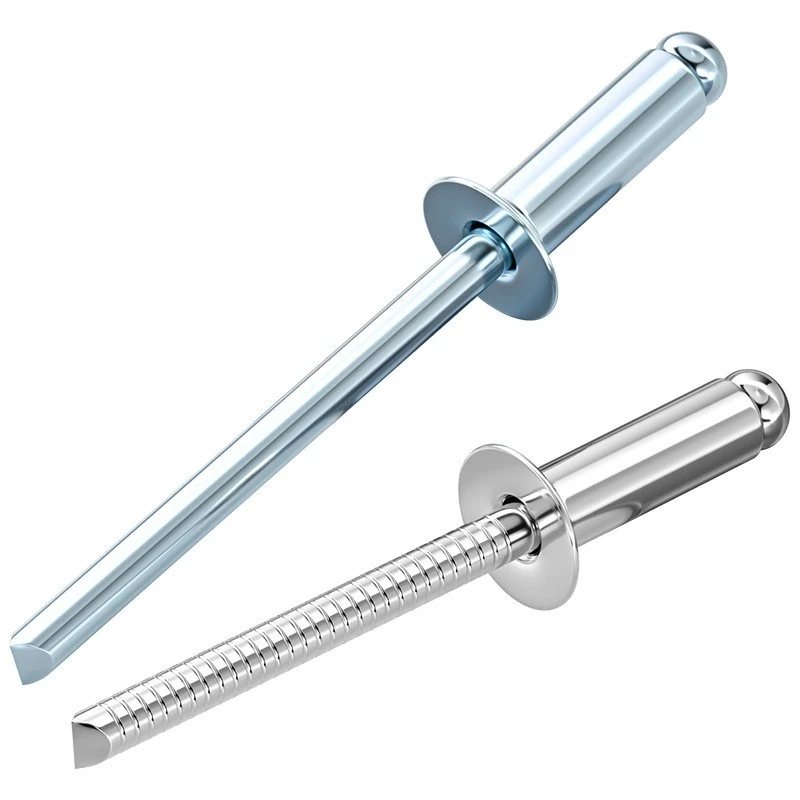

Open end blind rivets are simple and commonly used. They allow for easy installation, but they might not provide as good a seal as closed - end rivets. This could potentially lead to oxidation or other issues that affect conductivity in the long run.
Countersunk head rivets are flush with the surface of the material. They're often used when a smooth finish is required. The fact that they're flush doesn't directly affect conductivity, but like all rivets, the material and the quality of the connection matter.
Another factor is the number of rivets. If you're using a lot of rivets in a small area, it can increase the overall cross - sectional area of the conductive path. This can actually improve the electrical conductivity because there's more space for the electrons to flow. But if the rivets are made of a low - conductivity material, adding more of them might not be a good idea.
The quality of the installation also plays a big role. A poorly installed rivet might not make good contact with the material. This can create a high - resistance point in the electrical circuit, which can reduce the overall conductivity. When we install rivets, we need to make sure they're properly seated and that there's good surface contact between the rivet and the material.
Let's talk about some real - world applications. In the electronics industry, electrical conductivity is super important. For example, in printed circuit boards (PCBs), rivets can be used to connect different components. If the rivets have a high conductivity, they can ensure a reliable electrical connection. But if they don't, it could lead to signal loss or other electrical problems.
In the automotive industry, rivets are used to assemble various parts of the vehicle. Electrical systems in cars rely on good conductivity to function properly. Using the right type of rivets can help maintain the integrity of the electrical circuits.
In the aerospace industry, where weight and reliability are critical, the choice of rivets is even more important. High - conductivity rivets can help reduce electrical resistance, which is crucial for the proper functioning of avionics and other electrical systems.
So, to sum it up, rivets can affect the electrical conductivity of materials, but it's not a one - size - fits - all situation. The type of rivet, the material it's made of, the number of rivets, and the quality of the installation all play important roles.
If you're in the market for rivets and you're concerned about electrical conductivity, we're here to help. We've got a wide range of rivets to choose from, and our team can provide you with the best advice based on your specific needs. Whether you're working on a small electronics project or a large - scale industrial application, we've got the right rivets for you.
If you're interested in learning more or want to discuss your rivet requirements, don't hesitate to reach out. We're always happy to have a chat and help you find the perfect rivets for your project.
References
- Some basic textbooks on materials science and electrical engineering.
- Industry research papers on the use of rivets in different applications.