

Can cylindrical rivet nuts be used in high - temperature environments? That's a question I get asked a lot as a supplier of cylindrical rivet nuts. I'm here to break it down for you, so you can make an informed decision for your projects.
First off, let's talk about what cylindrical rivet nuts are. They're a type of fastener that can be installed in a pre - drilled hole, creating a threaded insert. They're super handy for applications where you need to join materials together or attach components. We offer a variety of types, like Flat Head Rivet Nuts, Half Hex Rivet Nuts, Countersunk Head Rivet Nuts, Full Hex Rivet Nuts, and Blind Hole Rivet Nuts. Each type has its own unique features and is suitable for different applications.
Now, let's get to the big question - high - temperature environments. When it comes to using cylindrical rivet nuts in such conditions, it all boils down to the material they're made of. Most commonly, cylindrical rivet nuts are made from materials like steel, aluminum, and stainless steel. Each of these materials has different temperature tolerances.
Steel rivet nuts are pretty tough and can handle moderate temperatures. They start to lose their strength at around 400 - 500°C (752 - 932°F). If the temperature goes higher than this, the steel will start to soften, and the rivet nut might fail to hold the load it's supposed to. So, for applications with temperatures in the moderate - high range, steel might not be the best choice.
Aluminum is another popular material. It's lightweight and easy to work with. But here's the catch - aluminum has a relatively low melting point, around 660°C (1220°F). Even before it reaches the melting point, its mechanical properties start to degrade at much lower temperatures, say around 150 - 200°C (302 - 392°F). So, using aluminum cylindrical rivet nuts in high - temperature environments is generally a no - go.
Stainless steel is where things get interesting. It's known for its corrosion resistance, but it also has better high - temperature performance compared to steel and aluminum. Some grades of stainless steel can withstand temperatures up to 800 - 1000°C (1472 - 1832°F) without significant loss of strength. However, not all stainless - steel grades are created equal. For example, austenitic stainless steels are great for high - temperature use, while ferritic stainless steels might not be as suitable.
Apart from the material, the design of the cylindrical rivet nut also plays a role. If it's designed with a large surface area, it might dissipate heat more effectively. But if it's a tight - fit or is enclosed in a way that traps heat, it could lead to overheating and premature failure.
Let's consider some real - world applications. In the automotive industry, engines and exhaust systems operate at high temperatures. If you're looking to use cylindrical rivet nuts in these areas, stainless - steel ones would be a much better option than steel or aluminum. In the aerospace industry, where parts need to withstand extreme temperatures during flight, the choice of material for rivet nuts is even more critical.
Another factor to think about is thermal expansion. Different materials expand at different rates when heated. If the cylindrical rivet nut and the material it's installed in have different rates of thermal expansion, it can lead to stress and eventually cause the joint to fail. So, it's important to match the rivet - nut material with the base material as closely as possible in terms of thermal expansion properties.
Now, you might be wondering how to test if a cylindrical rivet nut can handle high temperatures. One way is to conduct thermal cycling tests. In these tests, the rivet nut is exposed to repeated cycles of heating and cooling to simulate real - world conditions. You can then measure the changes in its mechanical properties, like tensile strength and torque resistance.
If you're still not sure which type of cylindrical rivet nut is right for your high - temperature application, don't hesitate to reach out. As a supplier, I've got the expertise to help you choose the best option for your specific needs. Whether it's for a small - scale DIY project or a large - scale industrial application, we've got the right rivet nuts for you.

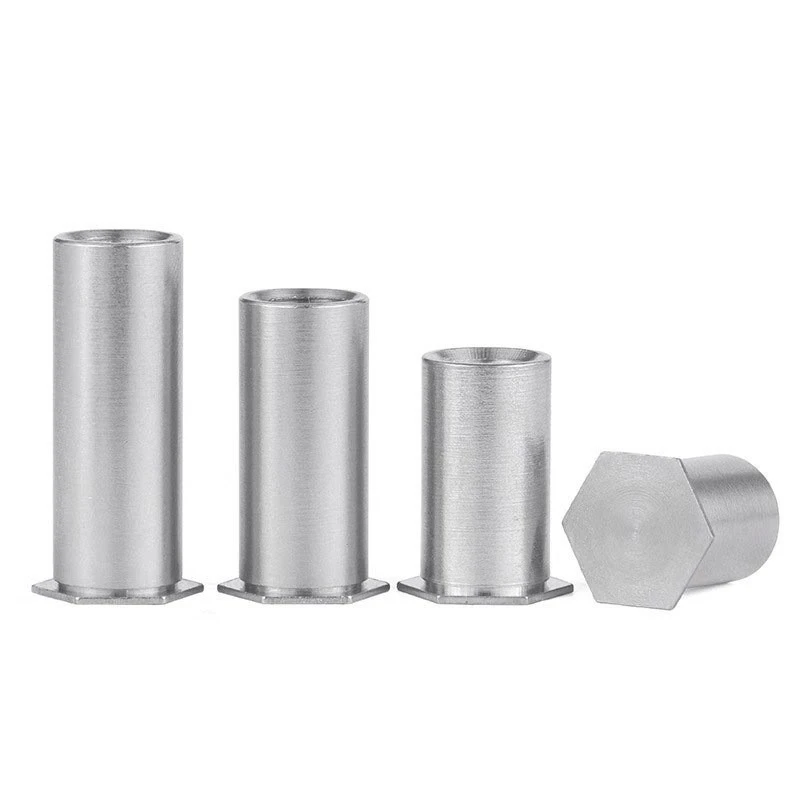
In conclusion, cylindrical rivet nuts can be used in high - temperature environments, but it depends on the material and design. Stainless - steel rivet nuts are generally the best choice for high - temperature applications, but you need to consider factors like thermal expansion and the specific temperature range of your project. If you're in the market for cylindrical rivet nuts for high - temperature use, or any other type of rivet nuts, feel free to contact us for more information and to start a procurement discussion.
References:
- "Mechanical Properties of Metals at High Temperatures" - A textbook on material science
- "Fastener Handbook" - A comprehensive guide on different types of fasteners and their applications