

When it comes to fastening solutions, self-tapping inserts play a crucial role in various industries. As a supplier of self-tapping inserts, I've witnessed firsthand the importance of understanding their hardness and how it impacts their performance. In this blog, we'll delve into the concept of self-tapping insert hardness, exploring what it means, why it matters, and how it relates to the effectiveness of these essential components.
What is Hardness in Self-Tapping Inserts?
Hardness, in the context of self-tapping inserts, refers to the material's resistance to deformation, indentation, or scratching. It is a fundamental property that determines how well an insert can withstand the forces exerted during installation and use. A harder insert is generally more capable of cutting threads into the host material efficiently and maintaining its integrity over time.
The hardness of self-tapping inserts is typically measured using standardized scales such as Rockwell, Brinell, or Vickers. These scales provide a numerical value that represents the material's hardness, allowing engineers and manufacturers to compare different inserts and select the most suitable one for their application.
Factors Affecting the Hardness of Self-Tapping Inserts
Several factors influence the hardness of self-tapping inserts, including the material composition, heat treatment, and manufacturing process.
Material Composition
The choice of material plays a significant role in determining the hardness of self-tapping inserts. Common materials used for these inserts include stainless steel, carbon steel, brass, and aluminum. Each material has its own unique hardness characteristics, which can be further enhanced or adjusted through alloying.
- Stainless Steel: Stainless steel inserts are known for their corrosion resistance and relatively high hardness. They are often used in applications where durability and resistance to environmental factors are critical.
- Carbon Steel: Carbon steel inserts are typically harder than stainless steel and offer excellent strength and wear resistance. However, they are more prone to corrosion and may require additional surface treatments.
- Brass: Brass inserts are softer than steel inserts but offer good electrical conductivity and are often used in applications where electrical grounding is required.
- Aluminum: Aluminum inserts are lightweight and have good corrosion resistance. They are commonly used in applications where weight reduction is a priority.
Heat Treatment
Heat treatment is a process used to alter the physical and mechanical properties of a material, including its hardness. By heating the insert to a specific temperature and then cooling it at a controlled rate, the material's internal structure can be modified, resulting in increased hardness and strength.
There are several types of heat treatment processes that can be applied to self-tapping inserts, including annealing, quenching, and tempering. Each process has its own specific purpose and can be tailored to achieve the desired hardness and performance characteristics.
Manufacturing Process
The manufacturing process used to produce self-tapping inserts can also affect their hardness. Precision machining techniques, such as cold forming and thread rolling, can help to ensure consistent hardness and dimensional accuracy. Additionally, the use of high-quality raw materials and strict quality control measures during the manufacturing process can contribute to the overall hardness and reliability of the inserts.
Why Hardness Matters in Self-Tapping Inserts
The hardness of self-tapping inserts is a critical factor that can significantly impact their performance and longevity. Here are some key reasons why hardness matters:

Efficient Thread Cutting
A hard insert is better able to cut threads into the host material quickly and cleanly. This reduces the installation time and effort required, while also minimizing the risk of thread damage or stripping.
Resistance to Wear and Tear
Inserts with higher hardness are more resistant to wear and tear, ensuring that they maintain their integrity and performance over an extended period of time. This is particularly important in applications where the inserts are subject to frequent use or high loads.
Improved Holding Power
The hardness of the insert affects its ability to grip the host material securely. A harder insert provides better holding power, reducing the risk of loosening or vibration-induced failure.
Compatibility with Different Materials
The hardness of the insert should be compatible with the hardness of the host material. If the insert is too hard, it may cause damage to the host material. Conversely, if the insert is too soft, it may not be able to cut threads effectively or provide sufficient holding power.
Selecting the Right Hardness for Your Application
Choosing the right hardness for self-tapping inserts depends on several factors, including the type of host material, the application requirements, and the expected operating conditions. Here are some general guidelines to help you select the appropriate hardness:
Soft Host Materials
For soft host materials, such as aluminum or plastic, a relatively softer insert may be sufficient. A softer insert can cut threads more easily without damaging the host material.
Hard Host Materials
For hard host materials, such as steel or stainless steel, a harder insert is typically required. A harder insert can withstand the forces involved in cutting threads into the hard material and provide better holding power.
High-Load Applications
In high-load applications, where the inserts are subject to significant forces, a harder insert with high strength and wear resistance is recommended. This ensures that the inserts can maintain their integrity and performance under extreme conditions.
Corrosive Environments
In corrosive environments, such as marine or chemical applications, the choice of material and hardness is crucial. Stainless steel inserts with high corrosion resistance and appropriate hardness are often the preferred choice.
Our Range of Self-Tapping Inserts
As a leading supplier of self-tapping inserts, we offer a wide range of products to meet the diverse needs of our customers. Our inserts are available in various materials, sizes, and hardness levels, ensuring that you can find the perfect solution for your application.
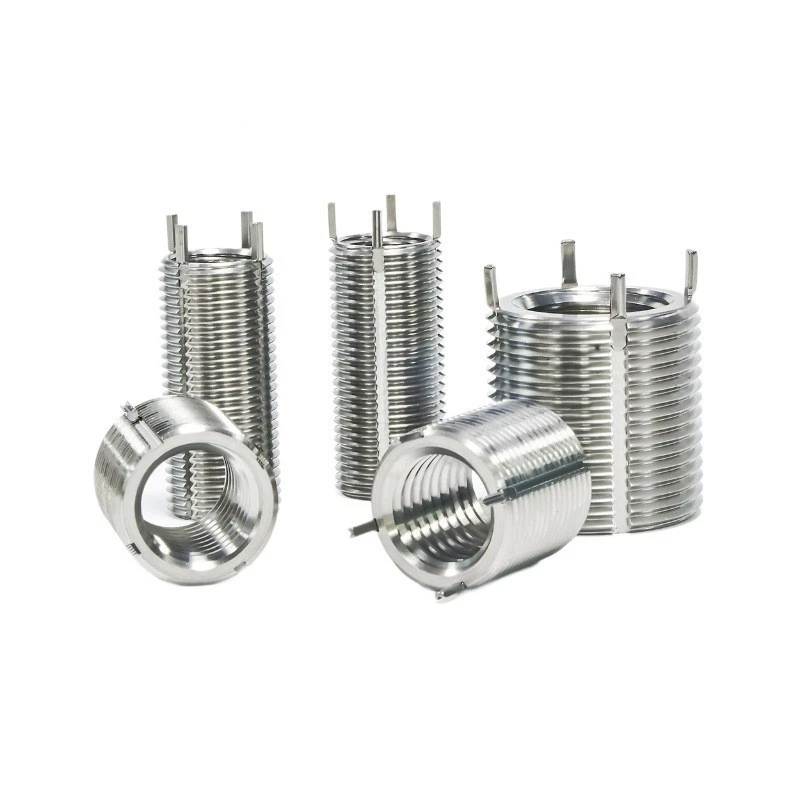
- Keyed Threaded Inserts: These inserts feature a keyed design that provides additional torque resistance and prevents rotation.
- Tangless Thread Inserts: Tangless inserts eliminate the need for a tang, making them easier to install and providing a clean finish.
- Unified Series Thread Inserts: Our unified series inserts are designed to meet the standards of the Unified Thread Standard, ensuring compatibility with a wide range of applications.
- Self Tapping Inserts: Our self-tapping inserts are engineered to cut threads into the host material quickly and easily, providing a reliable and cost-effective fastening solution.
- Double Threaded Insert: Double-threaded inserts feature threads on both ends, allowing for easy installation and removal.
Contact Us for Your Self-Tapping Insert Needs
If you're in the market for high-quality self-tapping inserts, look no further. Our team of experts is here to help you select the right inserts for your specific application. We offer competitive pricing, fast turnaround times, and excellent customer service.
Whether you're a small business or a large corporation, we have the experience and resources to meet your needs. Contact us today to discuss your requirements and get a free quote. Let us help you find the perfect self-tapping inserts for your next project.
References
- ASM Handbook Volume 1: Properties and Selection: Irons, Steels, and High-Performance Alloys.
- Machinery's Handbook, 30th Edition.
- ASTM International Standards for Hardness Testing.